
















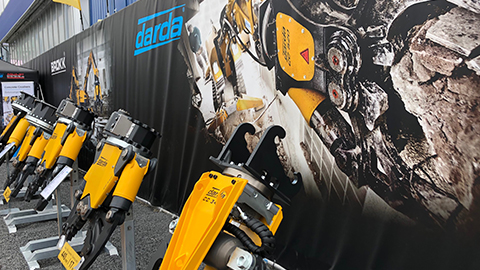





Formwork systems define the quality, dimensional accuracy, and construction speed of concrete structures. They shape fresh concrete, transfer loads in a controlled manner, and enable safe workflows on the construction site. At the same time, they influence later processes such as concrete demolition, special demolition, building gutting, and precise concrete cutting. At interfaces between formwork, reinforcement, and concreting, tasks often arise later for gentle separation and finishing methods. In sensitive environments or during selective deconstruction, tools such as concrete demolition shear, hydraulic splitter, steel shear, Multi Cutters, and suitable mobile Hydraulic Power Units from Darda GmbH are options.
Definition: What is meant by formwork system
A formwork system is a temporary, reusable, or stay-in-place mold for producing concrete elements. It typically consists of formwork sheathing, girders or frames, alignment and bracing elements, anchors, shoring, as well as work and protection components. The aim is to ensure geometry and surface quality, safely absorb fresh concrete pressure, comply with tolerances, and enable efficient concreting. Formwork systems range from frame formwork for walls to girder formwork and support scaffold for slabs, and to climbing and sliding systems for tall structures and special geometries. They are an integral part of the construction process and have effects extending into the stripping and post-processing phase, where clean separation and corrective work on concrete, reinforcement, or built-in components are often required.
Structure and components of modern formwork systems
Modern systems combine a load-bearing structure with a concrete-suitable surface. Core components are formwork sheathing (wood, plastic, steel), walers or frames, anchors and cones, shoring prop, clamps, turnbuckles, as well as work platform and guardrail. They are complemented by joint profiles, chamfer strips, stop-ends, built-in components, and seals. Decisive factors include uniform load distribution, tight joints, easy adjustability, ergonomic handling, and robust, repeatable connection technology. Proper selection and professional assembly reduce rework, surface defects, and later interventions such as the removal of excess concrete or re-cutting of edges.
Formwork types and typical applications
Formwork systems are differentiated by component, construction method, and degree of reuse. Selection follows geometry, placement rate, surface requirements, and construction logistics.
Common systems at a glance
- Frame formwork (wall): Modular panels with integrated walers, fast and modular, suitable for standard geometries and serial cycles.
- Girder formwork: Timber or steel longitudinal girders with sheathing, high adaptability for large heights, curves, and demanding exposed-concrete finishes.
- Slab formwork and support scaffold: Tables, panels, or rib systems, supported with props or room scaffolds, optimized for erection performance and repetition.
- Climbing and self-climbing systems: For high walls and cores; safe work platforms, defined climbing cycles.
- Sliding and tunnel formwork: Continuous or cyclic construction for infrastructure, tunnels, shafts, and basins.
- Stay-in-place formwork: Remains within the element, e.g., at joints, foundation ribs, or in difficult ground conditions.
Design, loads, and safety
Design is governed by fresh concrete pressure, self-weight, wind loads, construction stages, and anchor forces. Influencing factors include concrete temperature, consistency, placement rate, element height, aggregate, and plasticizer. Uniform, documented concreting, adequate bracing, controlled height alignment, and a coherent safety concept with fall protection and lifting points are essential. The systems’ approvals, installation instructions, and load tables must be observed. Pre-pour checks (tightness, anchor layout, spacers, cover) prevent damage such as bleeding, honeycombing, misalignment, or inadmissible deformations that could necessitate later removal and corrective work.
Erection, concreting, and stripping
Erection includes subgrade inspection, surveying, alignment, anchor and joint planning, and organizing material flows. During concreting, pressure build-up, compaction, formwork joints, and the use of the internal vibrator must be controlled. Stripping times depend on temperature, cement type, element thickness, curing, and structural loading. During stripping, surfaces are protected, edges secured, and built-in components exposed. Anchor points, tie holes, and cones must be carefully closed and, where necessary, reprofiled, particularly for exposed concrete or water-stressed elements.
Clean stripping and post-processing
Typical steps after stripping include removing tie rods, flush cutting or recessing ends, patching defects, and working edges. Where hammering is risky or causes vibration, controlled, low-vibration separation is recommended. Depending on the situation, concrete edges are precisely corrected with concrete demolition shear, cast-on brackets are separated, or firmly adhering build-ups are selectively released with a hydraulic splitter. steel shear and Multi Cutters cut exposed reinforcement, anchors, or built-ins; hydraulic power packs supply the tools with the required energy.
Interfaces with concrete demolition and special demolition
Formwork planning and deconstruction strategy should be considered together. Changes in the construction sequence, adjustments to openings, reduction of excess concrete, or creation of connections may require selective demolition work. In concrete demolition and special demolition as well as in building gutting and concrete cutting, low vibration, low dust and noise, and high precision are crucial. concrete demolition shear enable dosed removal at edges and opening up zones of elements without overloading the load-bearing structure. hydraulic splitter create controlled crack paths even in thick cross-sections, which is advantageous in sensitive areas, with adjacent use, or in heritage contexts. steel shear and Multi Cutters handle cutting reinforcement connections, built-ins, and anchor remnants, while hydraulic power packs provide compact and mobile power delivery.
Typical application scenarios
- Subsequent wall openings in formed walls while preserving adjacent exposed concrete surfaces.
- Removal of excess concrete at slab edges, parapets, or upstands without inducing vibration in rooms below.
- Selective removal of cast-on brackets, niche stop-ends, or stay-in-place formwork elements.
- Deconstruction of temporary concreting aids and process-safe exposing of waterstops and built-in components.
- Flush trimming of penetrations, anchor heads, and attachment points.
Formwork systems in tunnel and infrastructure construction
In tunnels, shafts, and basins, tunnel and sliding formwork, large-format girder formwork, and hard-to-access work areas are used. The requirements for surface, tightness, and geometry are high, as are the specifications for safety and construction logistics. During stripping or plan changes, massive cross-sections often have to be opened selectively. In rock breakout and tunnel construction, low-vibration methods are essential. A hydraulic splitter can introduce pressure into the element in a controlled way to create defined separation joints, while concrete demolition shear assist with edge finishing and clearing. Exposed reinforcement is cut with steel shear or Multi Cutters.
Surface quality, formwork sheathing, and exposed concrete
The formwork sheathing determines the surface appearance. Joint layout, tie pattern, pores, color tone, and flatness depend on material, care, and tightness. For exposed concrete, reproducible grids, careful compaction, a defined concrete mix, and intact formwork sheathing are crucial. Corrections through post-processing should be minimized. Where unavoidable, precise, material-saving interventions help: local removal of burrs or protrusions, opening small defects, and targeted exposing of connection areas. Tools like concrete demolition shear allow a controlled approach with minimal scatter, preserving surface quality.
Sustainability, reuse, and circularity
Formwork systems are reused many times. Durable components, repairable sheathing, and efficient cleaning reduce resource consumption. Forward-looking formwork and joint planning avoids unnecessary rework, reduces dust and noise, and lowers the need for heavy deconstruction. In selective deconstruction, low-vibration methods—such as splitting instead of hammering, or clean crushing with shears instead of striking—favor the preservation of adjacent elements. This supports circularity, component reuse, and the protection of sensitive environments.
Planning, quality assurance, and documentation
Method planning, cycling, and load assumptions must be documented. This includes installation instructions, inspection plans, visual checks before concreting, measurement reports (elevation, alignment, squareness), cleaning and maintenance plans for the formwork sheathing, and releases before stripping. Digital models and coordinated tolerance concepts facilitate logistics and quality. Transparent documentation provides the basis for later decisions on building gutting, concrete cutting, and deconstruction, especially in existing buildings or during conversions under ongoing operations.
Selection criteria for the right formwork system
- Component geometry, tolerances, exposed concrete requirements, and tie pattern.
- Fresh concrete pressure, placement rate, temperature, and compaction concept.
- Erection performance, cycling, site access, and crane/lifting capacity.
- Reuse, repairability, and cleanability of the formwork sheathing.
- Occupational safety, fall protection, integrated work platforms.
- Downstream processes: stripping, post-processing, selective removal.
Typical error sources and prevention
- Insufficient bracing or number of anchors: leads to bulging and leakage—observe load tables, check assembly.
- Missing joint sealing: causes bleeding—plan sealing and joint layout.
- Excessive placement rate: increases formwork pressure—control placement speed, consider temperature.
- Improper stripping: edge spalling and surface damage—use a controlled sequence, appropriate lifting devices and separation/cutting tools.
- Unplanned rework: dust, noise, and damage—define correction points early and provide low-vibration methods.
Tools and methods for post-processing formed elements
For precise interventions on concrete surfaces, edges, and built-ins, controlled methods are key. concrete demolition shear are suitable for defined removal at edges, opening elements, and gently breaking small volumes. A hydraulic splitter uses hydraulic pressure to build targeted stresses and initiate crack lines—helpful for thick cross-sections, sensitive existing structures, or confined workspaces. steel shear and Multi Cutters efficiently cut reinforcement, anchors, and metallic inserts. The required power is provided by hydraulic power packs, designed for mobile use and controlled working pressure. In special situations, e.g., in contaminated sites or with special materials, tailored methods may be used as part of a special demolition.
Standards and responsibility in operation
The use of formwork systems and work on concrete elements is based on the applicable standards, approvals, and manufacturer instructions. Safety concepts, hazard analysis, training, and regular safety inspection are necessary to minimize risks. Specifications for stripping times, load capacities, or permissible separation/cutting methods must be assessed on a project-specific basis and carefully documented. Legal requirements can vary by country and project; project-specific coordination is therefore essential.