












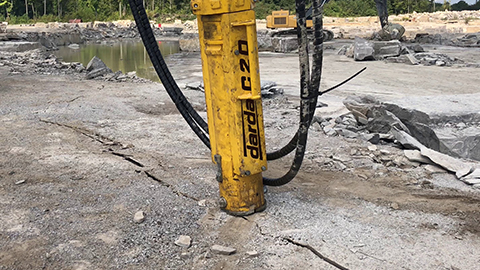



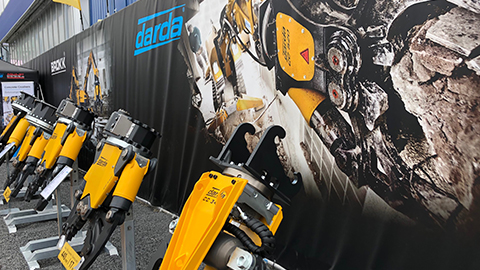





Pipe jacking is a trenchless construction method in which pipelines are pushed from an entry shaft straight or with slight curvature through the ground. It is used to pass beneath traffic areas, cross watercourses, or intersect existing infrastructure without an open trench. The method combines geotechnical guidance, hydraulic jacking force, and precise construction workflows—and directly touches activities from concrete demolition and special demolition (see concrete demolition and deconstruction), for example when constructing and removing entry and target shafts. Tools such as hydraulic demolition shear and hydraulic splitter from Darda GmbH are often used in adjacent work steps, for instance when opening reinforced concrete components or when exposing pipe segments in a controlled manner.
Definition: What is meant by pipe jacking
Pipe jacking (also jacking pipe drive or pipe jacking in the pressing method) refers to the hydraulic forward pushing of prefabricated thrust pipe from an entry shaft into the ground. The jacking forces are transferred to the drive pipe via a jacking station; in the target shaft, the pipe is received. Depending on the method, a steering head or a drive machine performs the soil excavation, while skin friction is reduced by support and lubricating agents. Jacking is carried out section by section via the pipe joint, so that loads are introduced over the entire pipe column into the reaction ring of the entry shaft. Typical applications include supply and wastewater pipelines, cable protection ducts, and drives in small-scale tunnel construction.
Mechanics and sequence of pipe jacking
Pipe jacking is based on transferring high hydraulic forces to a pipe column that is subjected to ground resistance, friction, and local obstructions. A counter-bearing in the entry shaft absorbs the reaction forces. The drive machine or a drilling/steering head creates the cavity; support fluids stabilize the face and reduce skin friction. Section by section, another pipe is placed in the jack, and the jacking cycle repeats until the target shaft is reached. Precision in alignment, lubrication, and jacking cadence is crucial to avoid ovality, ring cracks, or binding at the joint.
Method variants and typical application limits
Pipe jacking is implemented in different technical variants, depending on soil type, diameter, and alignment length.
Method overview
- Microtunneling with guided drive machine and support fluid for fine-grained to heterogeneous soils
- Auger boring method with a screw auger in stable soils
- Steel pipe jacking with casing and subsequent carrier line
- Open face in cohesive, stable soils for short lengths
Limits and influences
- Alignment lengths are limited by maximum permissible jacking forces and lubrication
- Curvature radii depend on socket geometry and sealing system
- Soil classes, groundwater, and obstructions determine support media and cutting technology
Planning parameters and design of jacking forces
The dimensioning of the jacking system and the selection of pipes are based on a realistic estimate of resistances and safety reserves.
Essential parameters
- Pipe diameter, wall thickness, material properties (concrete, GRP, steel)
- Drive length and number of intermediate jacking stations
- Route alignment (straight, curve, reverse curves)
- Skin friction depending on soil, support and lubricating agents
- Counter-bearing strength and reaction ring in the entry shaft
Practical notes
- Friction values are set conservatively and verified during construction via lubrication logs
- Intermediate jacking stations reduce peak forces and distribute loads more evenly
- Measurement systems continuously record jacking force, advance, axis position, and inclination
Pipes, sealing systems, and joining principles
Jacking pipes must reliably absorb jacking, bending, and contact stresses while ensuring sealing and centering.
Materials
- Reinforced concrete jacking pipes with socket and rubber-ring gasket for high jacking forces
- Steel pipes for combined jacking and cutting applications and as casing pipes
- GRP/GUP pipes with low weight and good corrosion resistance
Joining and sealing principles
- Socket joints with profiled seal for axial load transfer
- Ball-and-socket joints to accommodate small radii
- Interlayers (e.g., thrust pads) for uniform force transmission
Shafts, counter-bearings, and site setup
Entry and target shafts are key components of pipe jacking. They serve as positioning and receiving structures and transfer high jacking and reaction forces into the ground.
Entry shaft
- Reaction ring/counter-bearing with adequate load distribution
- Jacking station and insertion devices for jacking pipes
- Work platform with safe access, lifting gear, and media routing
Target shaft
- Unobstructed reception and precise elevation/position control
- Optional cutting/separation works for tying into existing structures
- Compliant dewatering and ventilation
Access and deconstruction in existing structures
When creating shaft openings, cutting tie-ins, or removing temporary components, hydraulic demolition shear as well as hydraulic splitter from Darda GmbH are frequently used. They enable controlled opening of reinforced concrete walls, exposing pipe connections, and pinpoint removal of bracing without transmitting vibrations over large areas.
Interfaces with concrete demolition and special demolition
Pipe jacking creates and requires workspaces in which components are constructed, adjusted, or dismantled. At these interfaces, precise cutting and splitting work is crucial.
Typical tasks
- Opening entry/target shafts in reinforced concrete: selective partial demolition with hydraulic demolition shears
- Separating mis-jacked or damaged pipe segments: controlled splitting of mineral components
- Adjusting wall openings and culverts: clean edges, defined removal profile
- Cutting free steel components (sheet piles, sections): steel shear or cutting torch in special operations
- Dismantling temporary fittings in confined spaces: handy multi cutters for mixed materials
In concrete demolition and special demolition, in strip-out and cutting, as well as in rock excavation and tunnel construction, these methods support the safe completion of jacking works and the tie-in to existing structures.
Quality assurance, geometry control, and documentation
Comprehensive control ensures positional accuracy and tightness over the entire jacking length.
Control priorities
- Jacking force and stroke recording per cycle
- Axis and inclination measurement, curve keeping
- Logs for lubrication, support media, and soil changes
- Joint inspection (tightness, offset, socket seating)
Documentation
- Shift reports with parameters, events, and measures
- Photo documentation of critical work steps
- Acceptance tests of the pipeline and the shafts
Risks, damage, and countermeasures
Typical risks arise from insufficient ground knowledge, unsuitable lubrication, or high skin friction. Early detection and targeted intervention reduce secondary damage.
- Ovality and ring cracks: jacking force management, intermediate jacking stations, adjustment of the lubrication strategy
- Binding at the socket joint: precise axis control, controlled stroke sequences
- Surface settlements: sufficient face support and pressure monitoring
- Collisions with obstructions: probing, locating, if necessary exposing and selective separation with hydraulic demolition shears
Occupational safety and environmental protection
Occupational safety has top priority in pipe jacking. Safety concepts account for confined workspaces, pressure systems, and media routing. Generally advisable are access and rescue concepts, instruction on hydraulic systems, gas and air measurements in shafts, and low-dust and low-noise cutting methods. When handling support and lubricating agents, follow the respective manufacturer instructions and the relevant regulations; disposal and water protection must be planned at an early stage. These notes are general and not case-specific.
Fields of application and practice-oriented use cases
Pipe jacking is linked in practice with several fields of application:
- Rock excavation and tunnel construction: Constructing entry shafts in loose rock or bedrock; pinpoint splitting of rock noses when the face or shaft contour must be adjusted. These works align with rock demolition and tunnel construction.
- Concrete demolition and special demolition: Opening thick reinforced concrete components, adjusting openings, dismantling temporary counter-bearings
- Strip-out and cutting: Tie-ins in existing structures, cutting reinforcement and embedded items, exposing lines
- Natural stone extraction: Less common, but relevant for shaft works in natural rock where controlled fractures are required
- Special operations: Inner-city locations with limited space, working under live traffic, sensitive protection of existing assets
Tool selection in the environment of pipe jacking
For adjacent works, different tools are used depending on material and space constraints. Hydraulic demolition shear are predestined for the precise opening and reduction of reinforced concrete components at shafts and excavations. Hydraulic splitter allow low-vibration release of mineral materials, for example when widening openings or removing damaged pipe sections. Steel shear and cutting torch are used for separating steel pipes, sections, or cladding, while Multi Cutters efficiently cut mixed construction materials in confined spaces. Darda GmbH covers this family of tools, enabling technically coordinated works around pipe jacking.