
















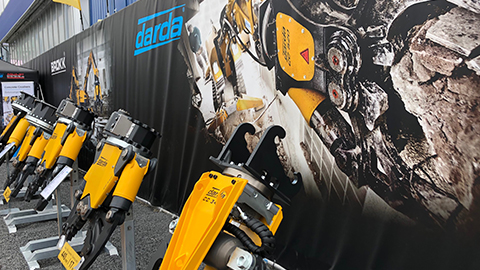





Ancillary costs in construction are the silent cost drivers of many projects – from the first idea to the documented handover. They arise in addition to the immediate execution costs and include planning, permits, site setup, energy, disposal, safety, and documentation. In concrete demolition, special demolition, gutting works, and in tunnel excavation or rock excavation, construction methods, equipment selection, and boundary conditions directly affect these items. For example, concrete demolition shear or hydraulic wedge splitter influence vibration, noise, emissions, cut quality, and logistics through their working principle – and thus numerous ancillary cost positions. This knowledge from Darda GmbH systematically categorizes ancillary construction costs and shows practical levers for calculation.
Definition: What is meant by ancillary construction costs
Ancillary construction costs are all project-related expenditures that are not directly attributable to the actual construction or deconstruction work, but are necessary for the success of the project. These include, among others, preparatory investigations and planning, regulatory procedures, site setup and construction logistics, occupational safety and health protection, environmental and emission protection, energy and utilities supply, surveying and documentation, insurance, disposal and recycling costs, as well as project administrative activities. In the deconstruction and demolition sector, ancillary costs additionally arise from barrier and protection measures, monitoring programs (dust, noise, vibrations), stability verification, as well as from the separation, sorting, and loading of material flows.
Types of costs at a glance: From planning to disposal
Ancillary construction costs can be sensibly grouped into cost blocks. Depending on the project type and area of application – concrete demolition and special demolition, gutting works, rock excavation and tunnel excavation, natural stone extraction or special demolition – the shares shift. The following groups occur regularly:
- Preparation and planning: Inventory, hazardous substance surveys, structural analysis, BIM/model coordination, scheduling and logistics concepts. Methods with low vibration levels (e.g., concrete demolition shear, hydraulic wedge splitter) can reduce the scope of monitoring and shoring concepts.
- Permits and conditions: demolition notice/demolition permit, nature protection, water protection and emissions requirements, traffic regulations. Construction methods with low noise and dust emissions often ease time restrictions and reduce additional measures.
- Site setup and logistics: Barricades, construction site power connection/water, containers, access, loading zones, crane scheduling. A hydraulic power pack, hydraulic hose line, and construction power supply must be planned if hydraulic methods are used (see hydraulic power units).
- Occupational safety and health protection: Coordination, briefings, PPE, fall protection, emergency and rescue plans. Low-noise, low-spark cutting and splitting techniques can change protection needs.
- Environmental and emission protection: Dust suppression, fog cannons, protective enclosure, ground vibration monitoring and noise measurements, dewatering system. Shears and splitters influence dust and vibration profiles and thus the scope and duration of monitoring programs.
- Energy and utilities: Construction site power connection cabinets, fuel supply for the hydraulic power pack, load management. The choice between electric or fuel-driven affects operating costs and organization.
- Disposal and recycling: Construction waste sorting, demolition separation (concrete/steel), construction site waste container, transport logistics, fees. Clean separation cuts by concrete demolition shear and steel shear facilitate separate recycling and improve payload utilization.
- Surveying and documentation: Setting out, as-built, photo documentation, test and acceptance documents, evidence for conditions.
- Insurance and fees: Project insurance, authority fees, testing and acceptance costs.
- Project management and administration: Site management, reporting, change-order management, communication with neighbors.
Impact of construction methods on ancillary costs
Process technology shapes the ancillary cost profile and schedule risks. Three aspects are decisive:
Vibration, noise, and dust
Mechanical crushing with concrete demolition shear works with low vibration and is often quieter than percussive methods. This can reduce the scope of ground vibration monitoring, the need for temporary shoring, or the duration of noise-intensive time windows. Hydraulic wedge splitter generate tensile splitting stresses in the borehole and are an alternative to blasting technology in rock excavation and sensitive existing structures – with positive effects on permits, neighborhood protection, and protective enclosure.
Cut quality and material flow
Clean separations accelerate sorting and loading. Concrete demolition shear separate concrete and reinforcement in a single step; steel shear, attachment shear, and hydraulic demolition shear handle metallic installations. This reduces relocations, double handling, and construction site waste container changes – a direct lever on disposal and transport logistics costs in gutting works and special demolition.
Energy supply and site setup
Hydraulic methods require a hydraulic power pack, hose management, and an appropriate construction site power connection or fuel plan. Clear load and runtime planning prevents downtime, reduces provisioning times, and stabilizes site overheads.
Set up calculation and cost breakdown in a practical way
For calculation, a structured cost breakdown into performance and ancillary cost blocks is recommended. Common are separations into site overheads, general business overheads, risk, and contingency. The following points support a reliable determination:
- Project analysis: Record location, access, environmental sensitivity, regulatory conditions, and time windows. Fields of application such as urban concrete demolition or tunnel excavation entail different ancillary cost profiles.
- Process comparison: Evaluate variants (e.g., shear vs. breaker hammer, splitting with hydraulic wedge splitter vs. blasting) regarding emissions, cut quality, setup times, and disposal logistics – including impacts on permits, monitoring programs, and site setup.
- Setup and idle times: Map setup/changeover, power unit changeover, hose routing, and traffic releases precisely in time.
- Energy and utilities demand: Define power draw, operating hours, fuel/electric mix, load management, and buffers.
- Disposal strategy: Plan separation accuracy, construction site waste container concept, routing, and densification of loads (e.g., crushing for payload utilization).
- Conditions and evidence: Associate monitoring programs, documentation, acceptances, and evidentiary obligations with services and durations.
- Risk and contingency management: Set realistic buffers for weather, finds, utility lines in existing structures, material flow, and neighborhood communication.
Permits, conditions, and their cost effects
Noise control, water protection, heritage concerns, and working hours shape the ancillary cost framework. Methods with low vibration levels and reduced noise peaks – such as the use of concrete demolition shear in existing buildings or hydraulic wedge splitter near sensitive infrastructure – can influence protective enclosure, monitoring scope, and permit conditions. Legal requirements vary by region; statements in this article are general in nature and do not replace case-by-case checks.
Site setup and energy for hydraulic applications
Hydraulics are standard in concrete demolition, special demolition, and rock excavation. Ancillary costs arise from:
- Power unit disposition: Power rating, placement, sound attenuation, exhaust routing (indoors).
- Energy distribution: Construction site power connection, cable and hydraulic hose line management, protection against crushing and leakage.
- Setup logistics: crane/lifting use, routing, temporary protective structures.
- Consumption and runtimes: Operating hours planning, load peaks, maintenance windows.
Realistic pacing of work and loading cycles reduces waiting times at construction site waste container and minimizes unnecessary power unit runtimes.
Disposal, separation, and recycling as ancillary cost levers
The material flow control determines fees and transport. Mechanical crushing with concrete demolition shear and specialized concrete crushers facilitates exposing reinforcement; steel shear and attachment shear prepare metal fractions. In gutting works, portable demolition shear speed up the removal of mixed installations, while hydraulic demolition shear safely segment large hollow bodies. This improves material purity, payload utilization, and turnaround times – key cost drivers in urban projects and special demolition.
Typical application areas and their ancillary cost profiles
Concrete demolition and special demolition
Work in existing buildings requires protection of adjacent components, vibration limits, and dust suppression. Concrete demolition shear enable controlled removal; the lower vibration output reduces the effort for ground vibration monitoring and temporary shoring. Additional ancillary costs arise from documentation and release cycles.
Gutting works and cutting
Indoor areas require compact, low-emission technology. portable demolition shear, attachment shear, steel shear, and hydraulic demolition shear structure the deconstruction and improve material separation, reducing construction site waste container changes and transports.
Rock excavation and tunnel excavation
In sensitive zones or blasting ban areas, hydraulic wedge splitter provide a method with a well-controllable effective zone. Complementary solutions include hydraulic rock and concrete splitters. The calmer working mode affects permit conditions and reduces safeguarding measures on adjacent infrastructure.
Natural stone extraction
Precise splitting improves block quality and reduces rework. This cuts sorting and transport operations and thus ancillary costs in processing.
Special demolition
Special situations – such as tight inner-city sites or plant areas – require meticulous logistics and evidence management. Low-emission methods are often advantageous here, as they limit efforts for protective enclosure and monitoring.
KPIs and a practical approach without number speculation
Instead of blanket reference values, a KPI-based approach derived from the project context is recommended:
- Setup ratio: Share of setup and routing times in the shift. The goal is to reduce it through takt planning and short routes.
- Container turnover: Changes per shift and average utilization. Good cut quality increases payload per transport.
- Monitoring and verification duration: Hours for monitoring and acceptances per week; often reducible through lower-emission methods.
- Energy KPI: kWh or liters per cubic meter of material – the basis for energy cost planning.
Checklist: Transparently managing ancillary costs
- Clarify conditions: Fix emission limits, working hours, monitoring obligations, and acceptances early.
- Match methods to the environment: Evaluate concrete demolition shear and hydraulic wedge splitter where vibration, noise, and dust are critical.
- Plan site setup modularly: Align energy, power unit, routes, and protective measures with the performance takt.
- Optimize material flows: Maximize separation quality on site, synchronize container and transport logistics.
- Digitize documentation: Capture route cards, evidence, measurements, and acceptances efficiently.
- Secure risks: Plan buffers for finds, weather, and neighbor concerns; define change-order paths.
Those who do not treat ancillary costs in isolation, but as the result of method, environment, and logistics, can influence them purposefully. Knowledgeable use of concrete demolition shear, hydraulic wedge splitter, and complementary tools such as steel shear, portable demolition shear, attachment shear, and hydraulic demolition shear provides technical options to sustainably control emissions, setup effort, and material flow costs in Darda GmbH’s fields of application – without compromising safety and quality.